
Longdog Exercise Guide
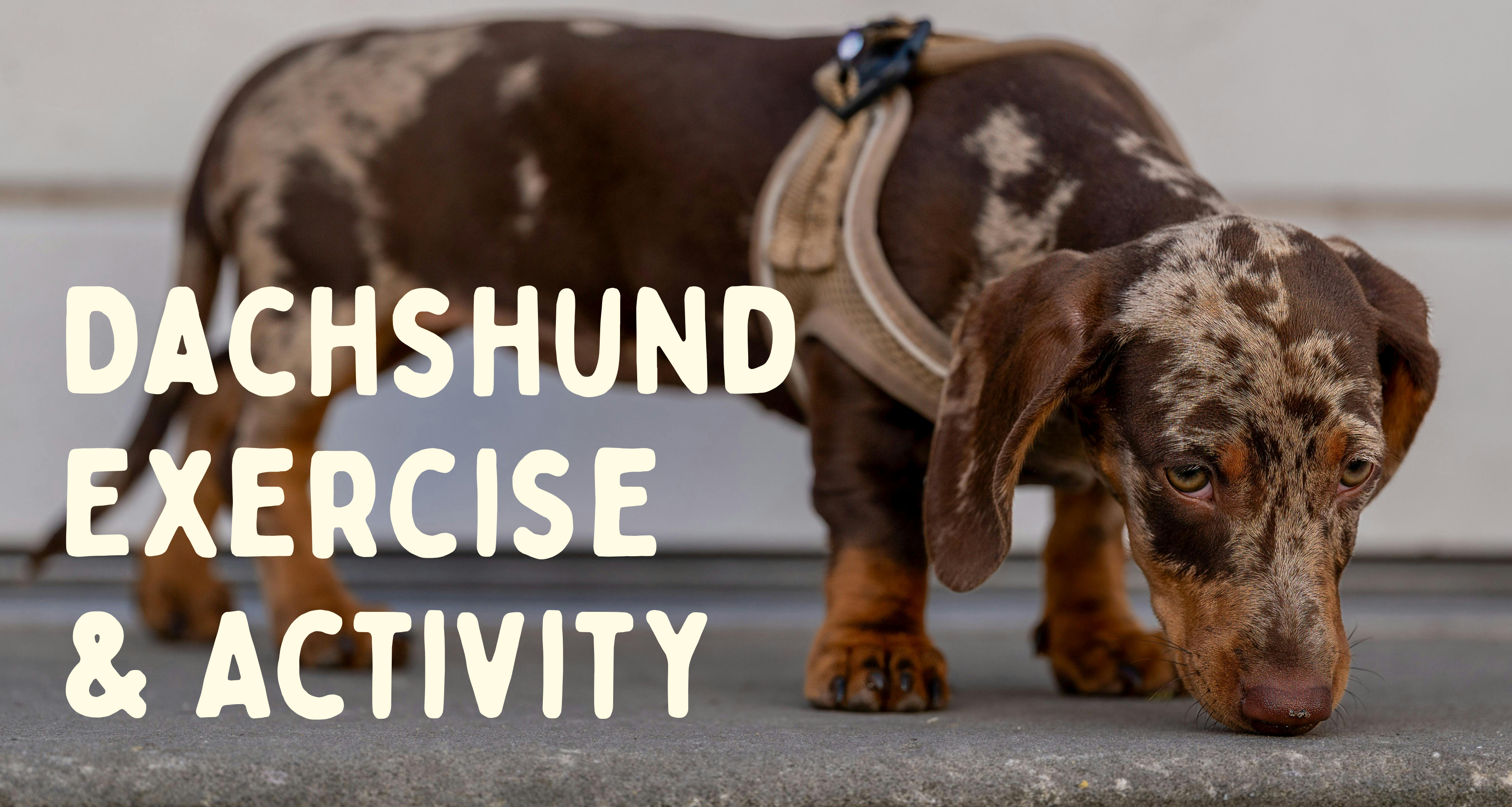
Dachshunds were bred to go to ground after badgers, so a lot of drive lives in a small frame. That same build — a long back and short legs — also means activity has to be handled with care. Too much jumping and pounding puts strain on the spine, while too little movement leaves a restless, bored dog.
The sweet spot is regular, low-impact activity that builds core and hind-end strength, keeps weight in a healthy range, and lets your doxie burn off energy without stressing the back. A consistent daily routine pays off in better behavior, easier weight management, and a longer, healthier life.
Daily activity: how much is enough?
A healthy adult dachshund does best with about 30–60 minutes a day, broken into 2–3 sessions. Consistency and quality matter more than one long trek — a brisk 20-minute walk plus 10 minutes of brain games usually beats a single exhausting outing.
- Puppies (under ~12 months): Roughly 5–10 minutes of gentle activity per month of age, 2–3 times a day. Lots of rest, light play, and no forced running.
- Adults: 2–3 sessions totaling 30–60 minutes, mixing walks, strength games, and mental work.
- Seniors (7+ years): 2–3 shorter sessions of 15–25 minutes, with a warm-up, soft surfaces, and an easy pace.
Spine-first movement basics
Dachshunds are prone to intervertebral disc disease (IVDD), so every routine should protect the spine:
- Keep them lean. Extra weight is extra load on the back.
- Use a harness, not a collar, for leash walking to take pressure off the neck.
- Skip high-impact moves: jumping on or off furniture, hard stops during fetch, and long flights of stairs.
- Warm up and cool down with 2–3 minutes of easy walking before and after each session.
- Build up gradually — add no more than about 10% to weekly time or intensity.
Methods to build doxie fitness
1. Easy-on-the-back walks
Walks are the foundation. Use a comfortable Y-front harness and keep a steady pace on flat ground or gentle slopes.
Tip: Sniffing is exercise. A slower "sniffy walk" tires the brain and helps settle an excitable doxie. Try 10 minutes brisk plus 5 minutes of free sniffing per outing.
2. Core and hind-end strength
Back health depends on a strong core and hind end. Add 2–4 short sets, 3–4 days a week, on non-slip surfaces:
- Cookie stretches: Lure the nose to each shoulder, then between the front legs — 3–5 gentle reps per side.
- Paws up: Front paws on a low, stable step (5–10 cm), hold 3–5 seconds. Builds shoulder and core strength without jumping.
- Sit-to-stand: Slow, clean sits and stands (no "plop") — 5–8 reps.
- Figure-8s and circles: Smooth, tight turns to improve body awareness.
3. Brain games
Drain energy safely and improve manners:
- Scent games: Scatter a handful of kibble in the grass and let your doxie forage.
- Puzzle feeders & snuffle mats: Swap one meal a day for a puzzle to slow feeding and engage the nose.
- Short shaping games: Reward tiny steps toward a new behavior.
- Obedience trainings: 3–5 minutes of cues (sit, down, stay, hand target) with plenty of rewards.
4. Back-friendly play
- Modified fetch: Roll the ball along the ground over short distances; avoid high bounces and sudden stops.
- Low tug: Keep the toy low, pull in a straight line, and practice calm releases.
- Indoor play: Hallway scent trails, gentle hide-and-seek, and calm "follow the leader" — no jumping on or off furniture.
Looking for a ready-made weekly exercise template? Review the weekly exercise template here.
Out and about: weather and ground
Because a dachshund's long, low body sits close to the ground, they soak up the heat radiating off the pavement far faster than taller breeds — so a walk that feels comfortable to you can already be too much for them. Their short legs put bellies and paw pads just inches from the surface, which drives up their core temperature in a hurry.
- Heat: Avoid your hot dog from getting hot! Stick to early-morning or evening walks, carry water, and pick shaded, grassy routes. Before heading out, press the back of your hand to the ground for five seconds — if you can't hold it there, it's too hot for paws.
- Wet weather: Choose grippy footing and give your doxie a quick towel-off after the walk.
- Beach: Firm, wet sand at low tide is the kindest surface; steer clear of deep, dry sand, which makes the back and shoulders work hard.
- Trails: Keep the pace easy and watch for steps, jumps, and steep scrambles your doxie shouldn't tackle.
Paw-safe ground temperatures
Hard surfaces like asphalt and concrete climb much higher than the air around them — and at low height, your dachshund feels it first. Use this as a quick reference before a warm-weather walk.
| Air temp | Asphalt | Concrete | Paw safety |
|---|---|---|---|
| 75°F / 24°C | ~110°F / 43°C | ~95°F / 35°C | Generally OK — still check by hand |
| 80°F / 27°C | ~125°F / 52°C | ~110°F / 43°C | Caution — walk on grass or in shade |
| 85°F / 29°C | ~135°F / 57°C | ~120°F / 49°C | Risky — keep walks very short or skip |
| 90°F / 32°C+ | ~150°F / 66°C | ~130°F / 54°C | Dangerous — stay off hard surfaces |
Puppies: building good habits early
- Keep outings tiny — 5–10 minutes, 2–4 times a day, of sniffy exploration and light skills.
- Carry puppies on stairs when you can, and introduce ramps early so safe habits stick.
- Build foundations: name, recall, hand targeting, and brief leash work in quiet spots.
- Socialize gently — one new surface, sound, or person at a time, always positive.
Seniors: staying active, gently
- Shorter, more frequent walks on soft, level ground.
- A light jacket on cold mornings can ease stiffness.
- Joint-friendly strength: cookie stretches, slow sit-to-stands, and gentle circles.
- Hydrotherapy, if available, is excellent low-impact conditioning — ask a rehab-savvy vet.
When to pause and call your vet
Stop activity and contact a vet if you notice any of the following during or after exercise: reluctance to move or jump, yelping when handled, hind-end weakness, a wobbly gait, dragging toes, or a sudden change in behavior. With back issues, early action matters.
Making it a daily routine
A steady daily rhythm of walks, strength games, and short training slots adds up quickly. Spread activity across the day rather than cramming it into one long outing, keep the movement low-impact, and calmer behavior, better rest, and a healthier back tend to follow on their own.
Looking for more dachshund care tips? This guide was informed by Everything Dachshund's "Exercise & Activity Needs" article — head to their site for additional doxie advice, resources, and care guides.